
Case Study: Modern Techniques in Historic Preservation – 3D Scanning Vulcan Bomber XL426
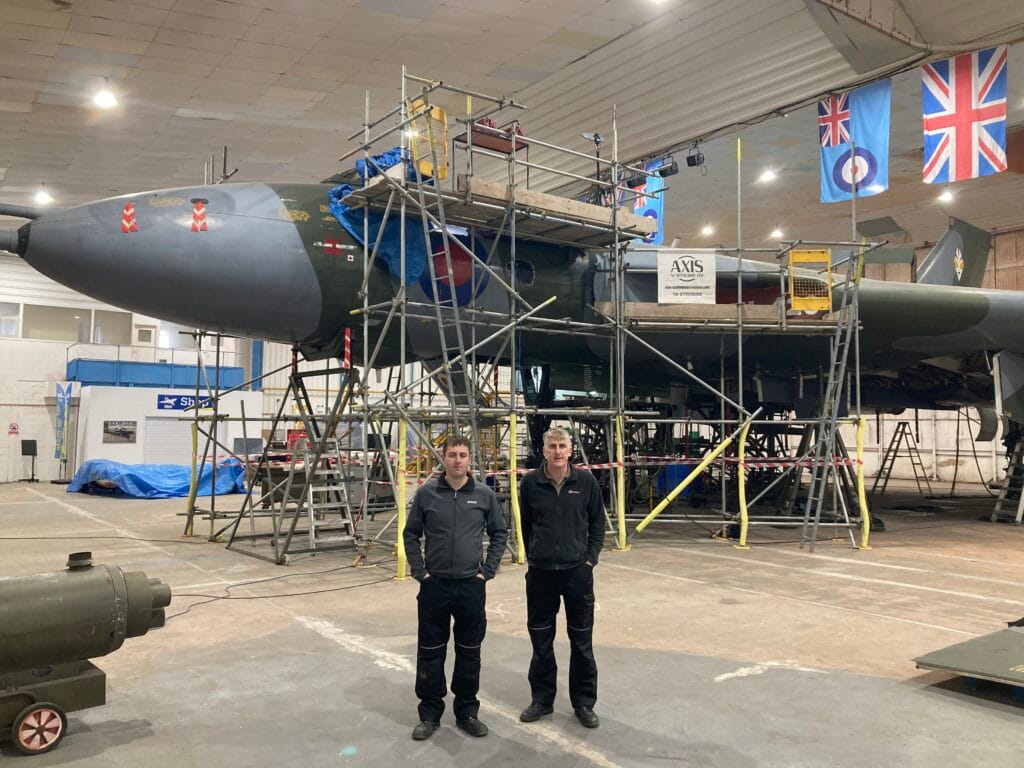
This year we were proud to provide 3D scanning services, to digitise an in-situ internal fuel tank of the iconic Cold War era aircraft Vulcan XL426. The Vulcan Restoration Trust has been meticulously maintaining this remarkable aircraft and its hangar at London Southend Airport for over three decades. This year, as part of their winter restoration efforts, the trust, in partnership with GKN Aerospace, embarked on the task to replace the aging skins for the bladder fuel tanks, situated above the front nose wheel bay (tanks #1 & #2).
Maintaining Traditional Manufacturing Methods
Traditionally, the fuel tank replacement process entailed carefully and diligently crafting paper templates to capture the precise shape of the tank and locations of over 170 mounting connectors within. A time consuming but tried-and-tested method with a proven track record. For this project, GKN Aerospace chose to explore 3D scanning alongside traditional techniques, to fully understand the benefits of having a full 3D digital model. Being aviation enthusiasts ourselves, we were glad do our part in maintain this piece of history.
3D Scanning the Number 1 Fuel Tank
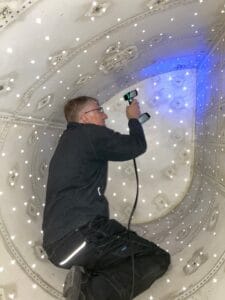
AB Technology took to 3D Scanning Tank #1 to create an accurate digital model that GKN could use to design new bladders using CAD software. Given the confined spaces within the aircraft, a handheld laser scanner featuring marker dot tracking proved indispensable.
This portable solution allowed for flexibility and manoeuvrability, essential for navigating the intricate contours of the tank without the need for a fixed base plate required by an articulated arm scanner. Using strategically placed markers along the three-meter-long tank, our scanner swiftly captured the intricate surfaces with ease.
The Vulcan Restoration Trust
During our time onsite, we had the privilege of exploring the aircraft alongside pilot Trevor, who was kind enough to share his knowledge and passion for the aircraft with us. Trevor and his team at The Vulcan Restoration Trust demonstrate a commendable level of dedication and attention to detail in their maintenance efforts. Despite the retirement of XL426 from active flight, she continues to provide enjoyment through regular high speed taxi runs and hangar visits, ensuring that her legacy endures for generations to come.

