On-site 3D Scanning Service
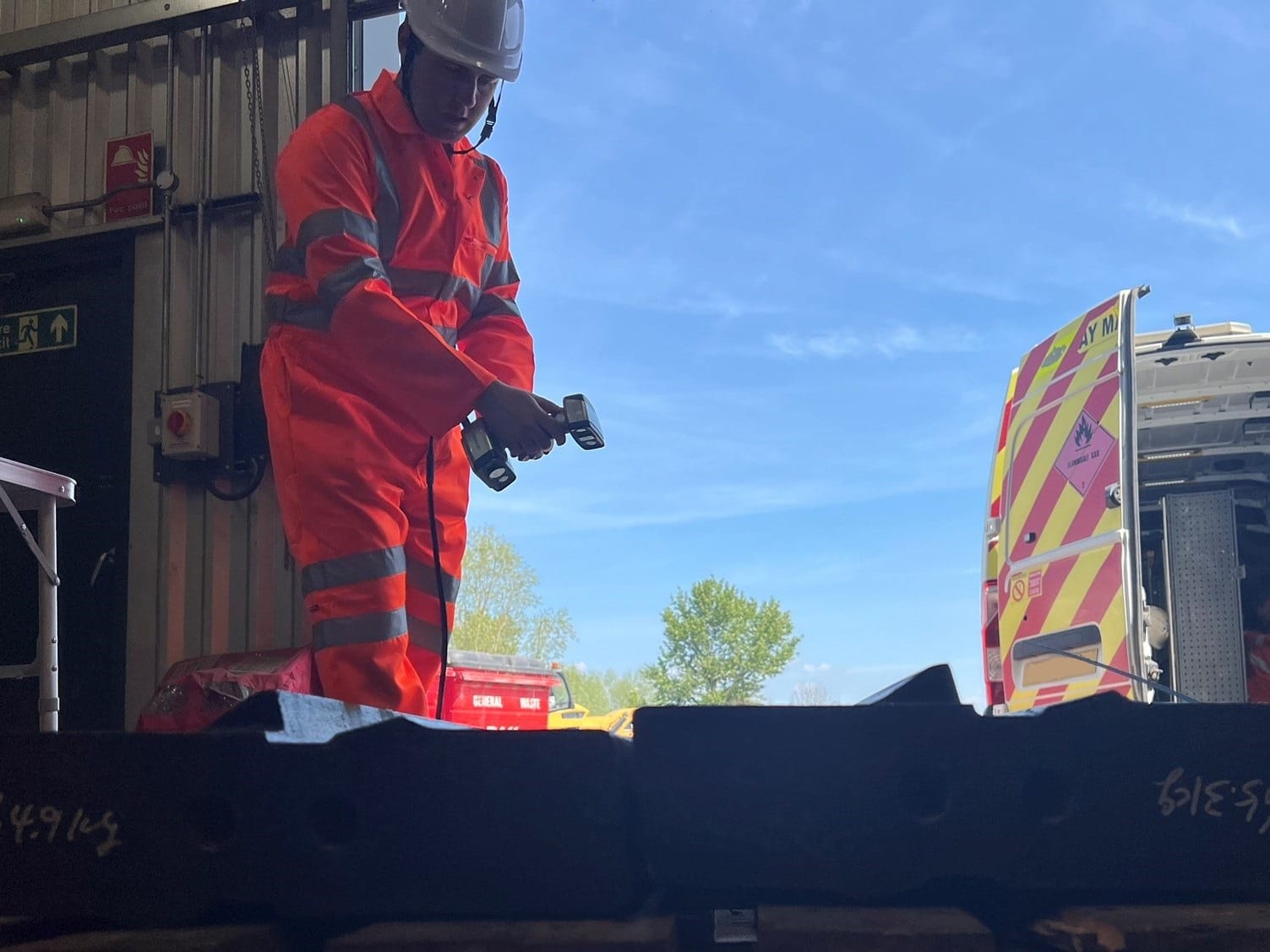
Can’t send it to us? We’ll come to you. Professional mobile 3D scanning anywhere in the UK for items that are too large to transport, too valuable, fixed in place, or impractical to take out of service.
ISO 9001:2015 Certified • 30+ Years Metrology Experience • UK-Wide Coverage
We bring the scanner to you
Our 3D scanning service is usually carried out at our Nottinghamshire facility, but when an item is too large or fragile to transport, fixed in place, or taking it off site would disrupt your operation, we can bring our mobile 3D scanning equipment to you.
On-site scanning lets us capture the required geometry where the item is installed or used. We provide the same professional scanning service on site as we do at our facility, with work ranging from engineering components and production machinery to aircraft structures and architectural stonework.

When does an on-site service make sense?
On-site scanning is most useful when moving the item is impractical, risky or disruptive. Common reasons include:
Too large or heavy to transport
Large fabrications, mould tools, lifting frames and other heavy assemblies can be difficult or expensive to move safely. In these cases, it often makes more sense to scan them where they are.
Too valuable or fragile to risk moving
Heritage objects, delicate items and rare components may be better left in place. Moving them can introduce risks of loss or damage.
Scanning in place eliminates transport risks entirely.
Production or time constraints
If removing an item would interrupt production, or access is limited to a short shutdown or specific time window, we can plan the scanning around those constraints.
Fixed or installed in place
Installed machinery, architectural features and other fixed geometry can be scanned in situ without dismantling or removing the object simply to capture its shape.
When on-site scanning doesn’t make sense
If your component can be safely sent to us, sending it to our Nottinghamshire facility is usually the more cost-effective option. See our 3D scanning page for more details.
Example projects showcasing our service
A selection of our on-site 3D scanning projects across aerospace, heritage and manufacturing. From aircraft components to historic stonework, these are examples of items we had to scan where they were, rather than bring them to our facility.
AEROSPACE • HERITAGE • ON-SITE 3D SCANNING
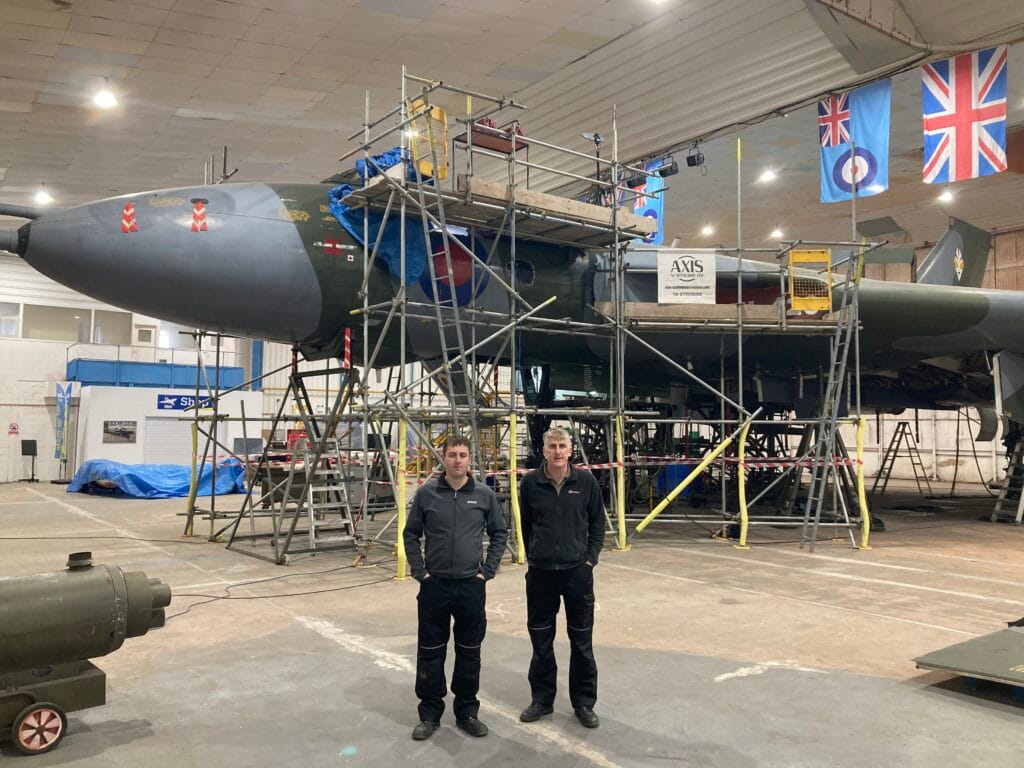
Vulcan Bomber XL426 fuel tank
The Vulcan Restoration Trust needed accurate 3D data from an internal fuel tank of Vulcan Bomber XL426. The tank is an integral part of the aircraft and could not be removed, so it had to be scanned in situ.
✓
Challenge: Capture the complete geometry of the in-situ internal fuel tank, including more than 170 mounting connectors.
✓
Solution: On-site handheld scanning from inside the fuel tank.
✓
Result: An accurate digital model that GKN Aerospace could use to design replacement fuel-tank bladders in CAD.
HERITAGE • CONSERVATION • ON-SITE 3D SCANNING
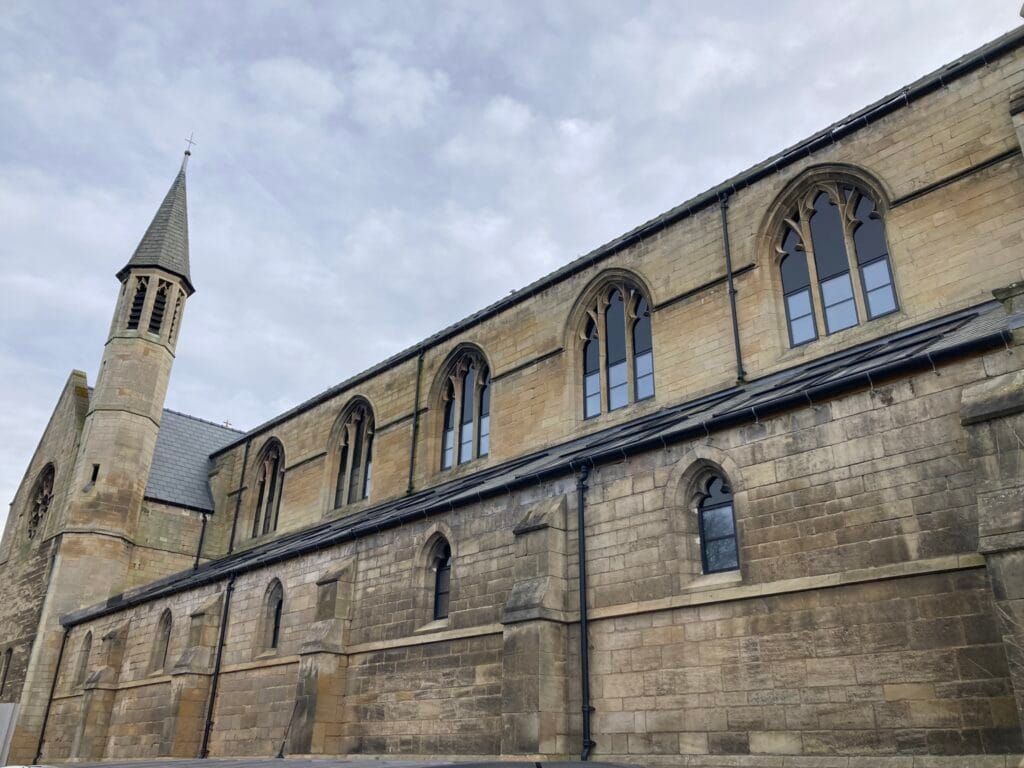
Grade II listed church window stonework
Following a fire at St Alban’s Church in Retford, the developers needed to install acrylic infill panels in the damaged window openings. The damaged stonework meant each panel had to be individually matched to its opening.
✓
Challenge: Every window opening was individually shaped, requiring each panel to match its particular stone surround with a specified clearance gap.
✓
Solution: 3D scanning each window and extracting individual 2D DXF profiles.
✓
Result: The DXF definitions produced panels that fitted each opening correctly first time.
MEDICAL • MANUFACTURING • ON-SITE 3D SCANNING
Minimising downtime with on-site scanning
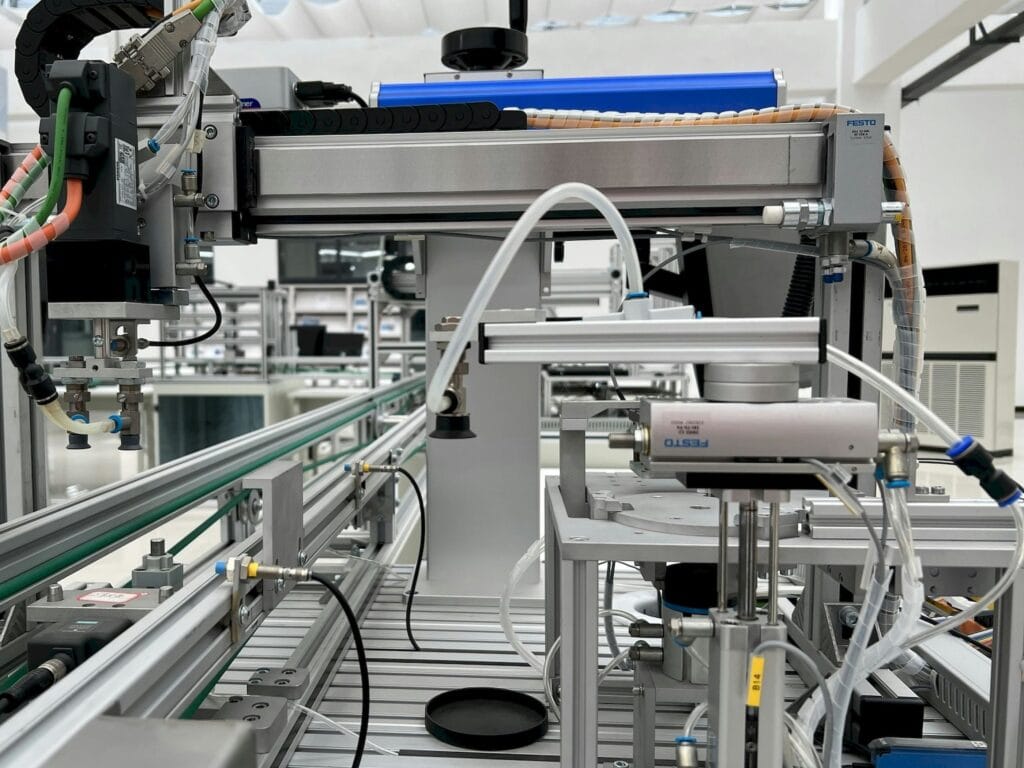
A customer needed detailed mesh models to facilitate upgrades to their medical inhaler production line with minimal downtime.
✓
Challenge: The production line had a hard limit of no more than 60 minutes downtime for the project.
✓
Solution: External areas were scanned while production continued, with the internal areas captured during the planned production pause.
✓
Result: CAD data was captured with under 10 minutes of production downtime, supporting the planned machinery upgrade.
How much does on-site 3D scanning cost?
£600 – £1,000 + VAT
Typical cost of an on-site 3D scanning project completed in a single day visit.
A fixed price before we start
Every project is quoted individually, and one of our engineers will provide a fixed-price quotation.
What affects the quotation
- The time required on site
- The location of your site and the travel required
- The amount of data processing and the final output required
- The size, complexity and number of items to be scanned
A step-by-step process for your on-site project
From your first enquiry through to delivery of the agreed files. Most of the work happens before we arrive and after we leave.
1
Before the visit
Enquiry, quotation and planning
Tell us what needs scanning
Send a brief description of your project, photos of the item to scan, and your location. Additional information that can help includes the required output and site-specific requirements.
You do not need every detail worked out before contacting us.
Engineer review and quotation
One of our engineers reviews your project and prepares the quotation, based on what you need the scan data to achieve. The engineer who quotes your project stays with it as the job progresses.
Plan the site visit
We agree the date and time and prepare RAMS where required. We also plan around site health and safety requirements, controlled areas and production shutdowns.
2
On your site
Set-up, scanning and data checks
Arrive and set up
On arrival, we liaise with your site contact, complete any required induction and confirm the working area. Setting up and calibrating the scanner normally takes less than 30 minutes.
Prepare and scan the item
We assess and prepare the surfaces where necessary. This may include applying tracking markers or self-evaporating scanning spray. We then scan the item, ensuring all required surfaces are captured.
Review the scan data
We check that we have the required coverage and data integrity while we are still on site. Tracking markers are removed and the scanning spray evaporates, leaving zero residue on your item.
3
Data and delivery
Processing and delivering the scan
Process the scan data
We process the scan data back at our Nottinghamshire facility. Scan-to-STL files are normally ready the same or next working day, while reverse engineered models typically take 2-3 working days.
Deliver the agreed output
We’ll send you a link to download the processed scan data, along with other files included in your quotation.
What you receive
The output is agreed before we visit and set out in your quotation. Don’t worry if you’re unsure which format you require. Tell us what you need the data to do and we will confirm the right format for the job.

Mesh model
For visualisation and 3D printing. A triangulated surface of the scanned item, ready to print, view or compare against your existing CAD.
Supplied as STL, OBJ or PLY.
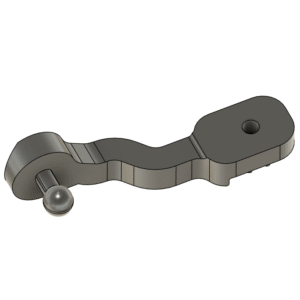
CAD model
For design and manufacture. A fully defined solid or surface model, reverse engineered from the scan data, that you can edit and build on.
Supplied as STEP, IGES or native CAD.
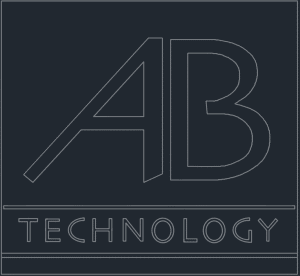
2D profile
For cutting and fabrication. A flat profile taken from the scan, ready to send to a cutting machine. The church window panels above were made this way.
Supplied as DXF.
Not sure a format will work with your software?
Visit our downloads page for example files you can download and test in your CAD package.
What accuracy can you achieve on-site?
We use scanners with manufacturer-specified accuracies down to 0.04 mm, but this does not mean that every on-site scan will achieve 0.04 mm accuracy.
The manufacturer’s specification provides the starting point for understanding the achievable accuracy of a 3D scan. The accuracy achieved in practice also depends on the size, shape and texture of the item, whether scanning in-house or on site. The difference between the two is the conditions in which the scanning is carried out. In-house, we scan within our environmentally controlled measuring room. On site, the conditions can vary from one project to another.
For this reason, we assess each project individually. Send us details of the item, along with photographs and any accuracy or tolerance requirements, and one of our engineers can discuss what is realistically achievable.
Every site presents different conditions


Working safely on your site
Safety is a priority whether we are working at your site or ours. Where requested, we can provide RAMS (Risk Assessments and Method Statements) ahead of the visit and complete your site induction process to support safe working on site.
Where we work
Based in Nottinghamshire, we travel UK-wide for on-site projects. We regularly work across the Midlands, Yorkshire, Manchester, Sheffield, and London, and we can travel to any UK location.
Need us to visit your site?
Upload photos of your part and get a no-obligation quote.
Most projects are quoted from a few photos, a brief description of your project, and the address of your site.
What to send us:
- Photos of the component from several angles
- The address or postcode for your site
- Any accuracy, file format or deadline requirements
- Any site access or PPE restrictions
Prefer to talk first? Call: +44 (0)1623 491700
Frequently Asked Questions
How much access space do you need to scan an object?
For small items we can normally work at a standard desk space. For heavy or bulky items, we ideally need to be able to walk around them and get within arm’s reach of the surface to be scanned.
Do you need mains power for on-site scanning?
230-volt mains power is preferred but other power sources can be used. This includes power banks with a 3-pin 230 V socket, though this can limit operating time.
Can you scan outdoors?
Yes. 3D scanning is regularly done outdoors, subject to the weather and availability of 230-volt power. The weather will be considered when arranging a date for any outdoor scanning projects and we can re-schedule if needed.
What is included in the price for on-site 3D scanning?
Travel, scanning, consumables, and post-processing are all included in the quoted price. There are no additional charges for the agreed work.
How much can you scan in one visit?
This depends entirely on the items being scanned. It could be 1 large or complex item or 20+ simple ones. For large projects, scanning can be split across multiple visits.
What is your typical lead time?
We can usually be with you within 1-2 working days once your order is confirmed. Actual availability depends on the project requirements and our schedule at the time.
Get a quote for on-site scanning
Tell us about your project and we’ll get back to you, usually within one working day.