
Case Study: How We Reverse Engineered a Casting into a Custom Manifold
Introduction
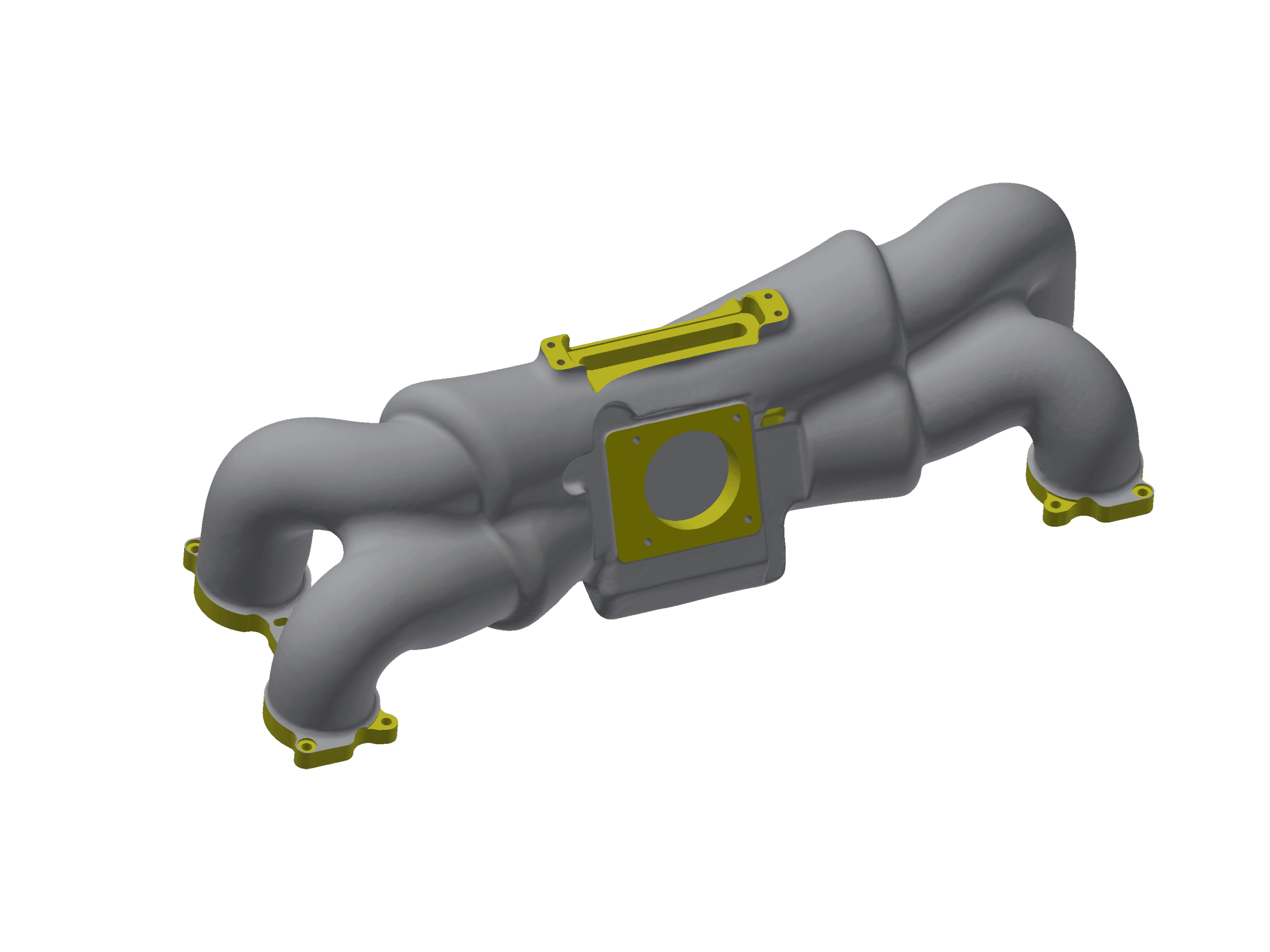
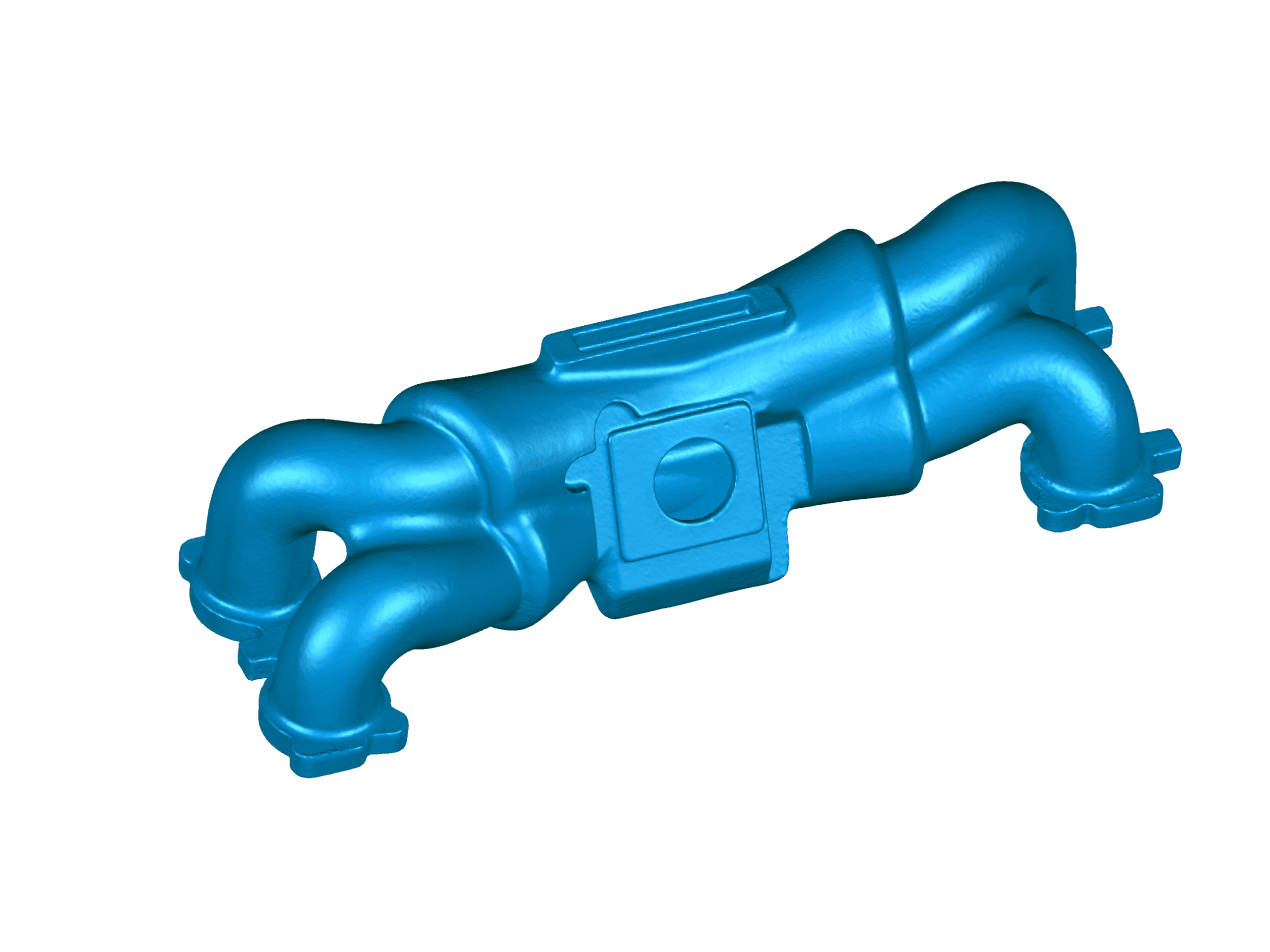
When an automotive aftermarket customer needed a bespoke high-volume inlet manifold for a Subaru Impreza, the task was to combine machined geometry from an existing Impreza manifold with a Cosworth high-flow casting. We used 3D laser scanning to capture both parts and reverse engineering to turn the scan data into a CAD model and a set of drawings that could be used for manufacture.
The Problem
The Cosworth casting was capable of supporting the required airflow, but the customer lacked the manufacturing definition needed to machine the interface features for the Subaru Impreza. What they did have was a standard Impreza manifold that could be used to extract the required machined features. The challenge was to merge these two sources into a single, coherent definition suitable for manufacture by a third-party machine shop, without ambiguity.
The Approach
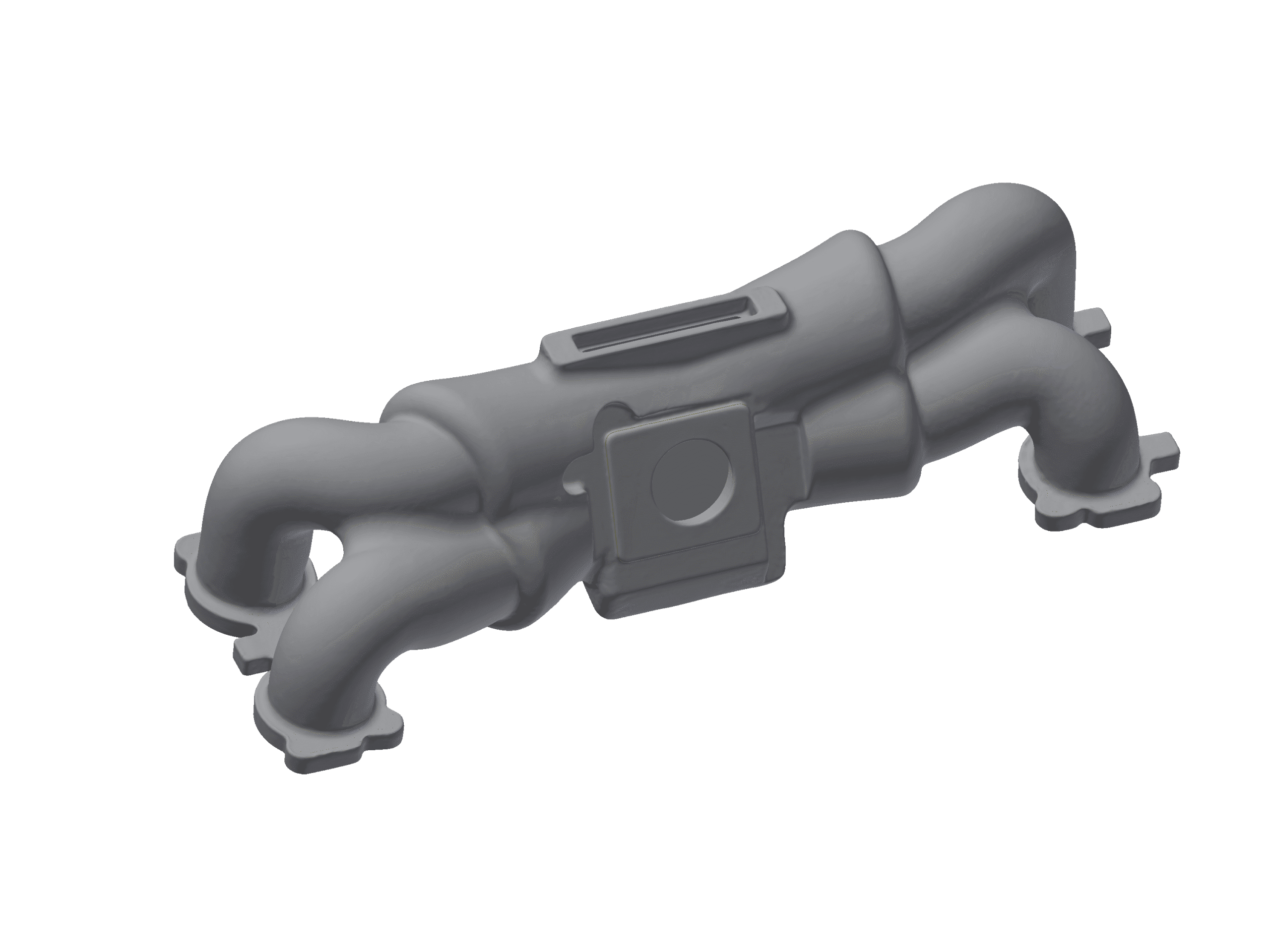
To deliver the desired outcome, the customer sent the Cosworth casting and machined Impreza manifold to our Blidworth facility, where we began by laser scanning both parts. From the scan data, we created CAD models for both and aligned them using common features. The Cosworth model was then updated to incorporate the machined features from the Impreza model.
Where tight tolerance features required higher confidence than the scan data alone could provide, we used CMM inspection to verify critical dimensions to within 0.005 mm. The CMM-verified dimensions were then used to update the CAD model.
Finally, detailed 2D engineering drawings were produced defining the machining requirements for manufacture.
The Outcome
The customer received two CAD models: a solid model of the high-flow casting and a second model incorporating the reverse engineered machined features, along with a 2D drawing package defining the new manifold. This provided a defined manufacturing dataset that could be used by a third-party machine shop to move from existing parts to production.

